


Introduction: Three Conversations That Changed Everything
What a Fortune 100 CIO, a cable newscaster, and anxious students taught me about the future of enterprise AI
The C-Suite Confession
“My board has given me a mandate to own our AI strategy.”
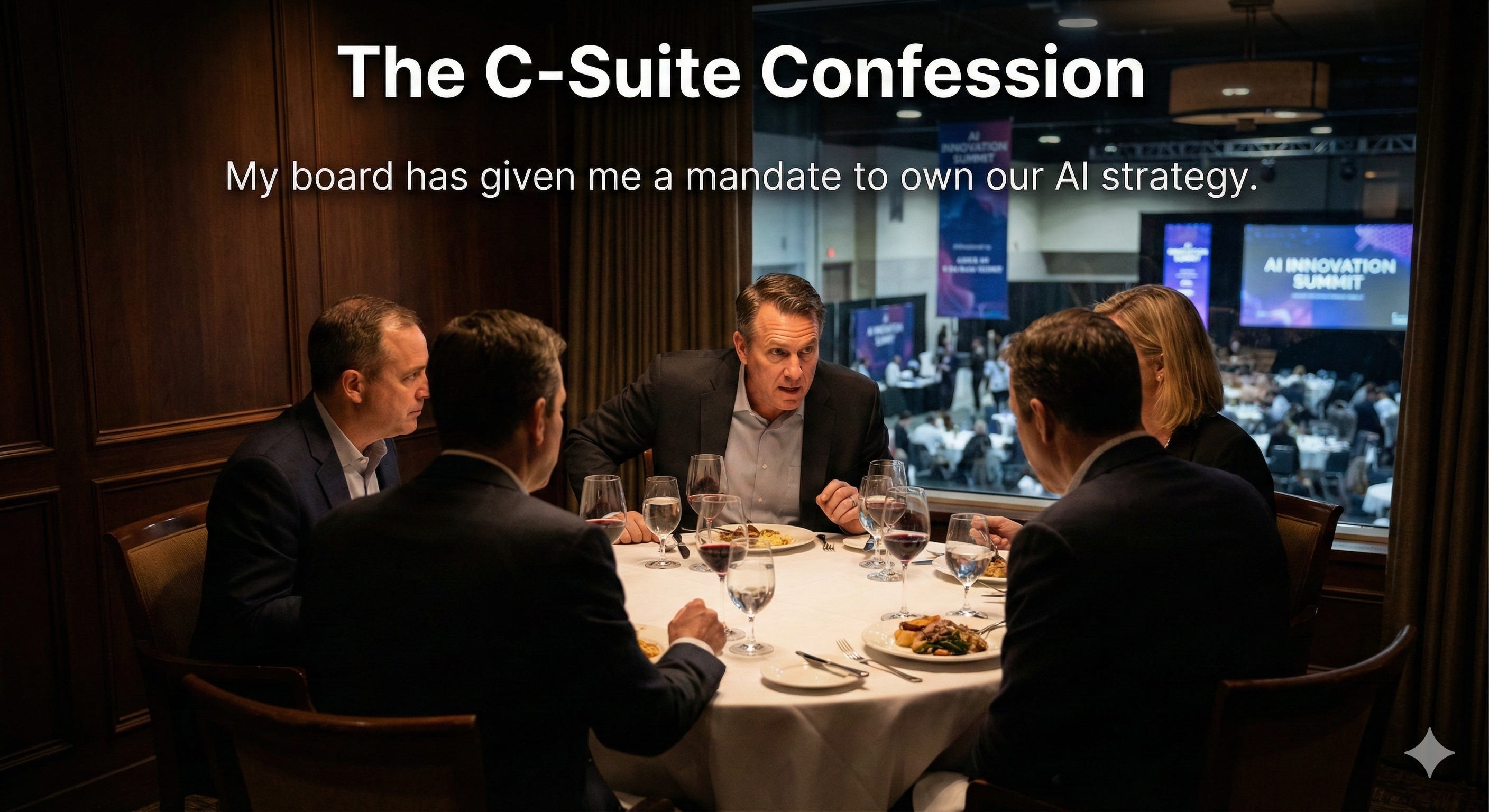
The CIO leaned forward, voice dropping. We were at a private dinner during a major AI conference—one of several I’ve helped organize and lead steering committees for this year. Around the table sat C-level executives from organizations ranging from Fortune 100 giants to rapidly growing companies of 10,000+ employees.
“There’s extreme pressure to show value. Fast. But out there,” he gestured vaguely toward the exhibit hall, “it’s the Wild Wild West. Every vendor promises transformation. Pilots are practically free—they’re throwing them at us. But here’s what nobody talks about...”
He paused, making sure everyone was listening.
“We can’t get anything into production. We hit a wall every single time.”
The heads around the table nodded. Every. Single. One.
“How do we set up governance without creating bureaucratic overhead? How do we scale these things without it becoming chaos? How do we move from ‘impressive demo’ to ‘actual operational system’ without rebuilding everything from scratch?”
I’ve heard variations of this conversation at least fifty times this year. As a Principal AI Solution Architect and steering committee member for major AI conferences, I’ve hosted meetups, moderated panels, and had countless off-the-record conversations with leaders who are terrified to admit publicly what they’ll say privately:
“We have no idea how to operationalize this.”
Nearly half of Fortune 100 companies now disclose AI as a focus of board oversight—up from just 16% a year ago. Boards are mandating AI strategies, appointing Chief AI Officers, and demanding ROI. But the playbook for actually executing that strategy at scale? It doesn’t exist yet.
That’s what we’re going to build together.
The Newscaster’s Question
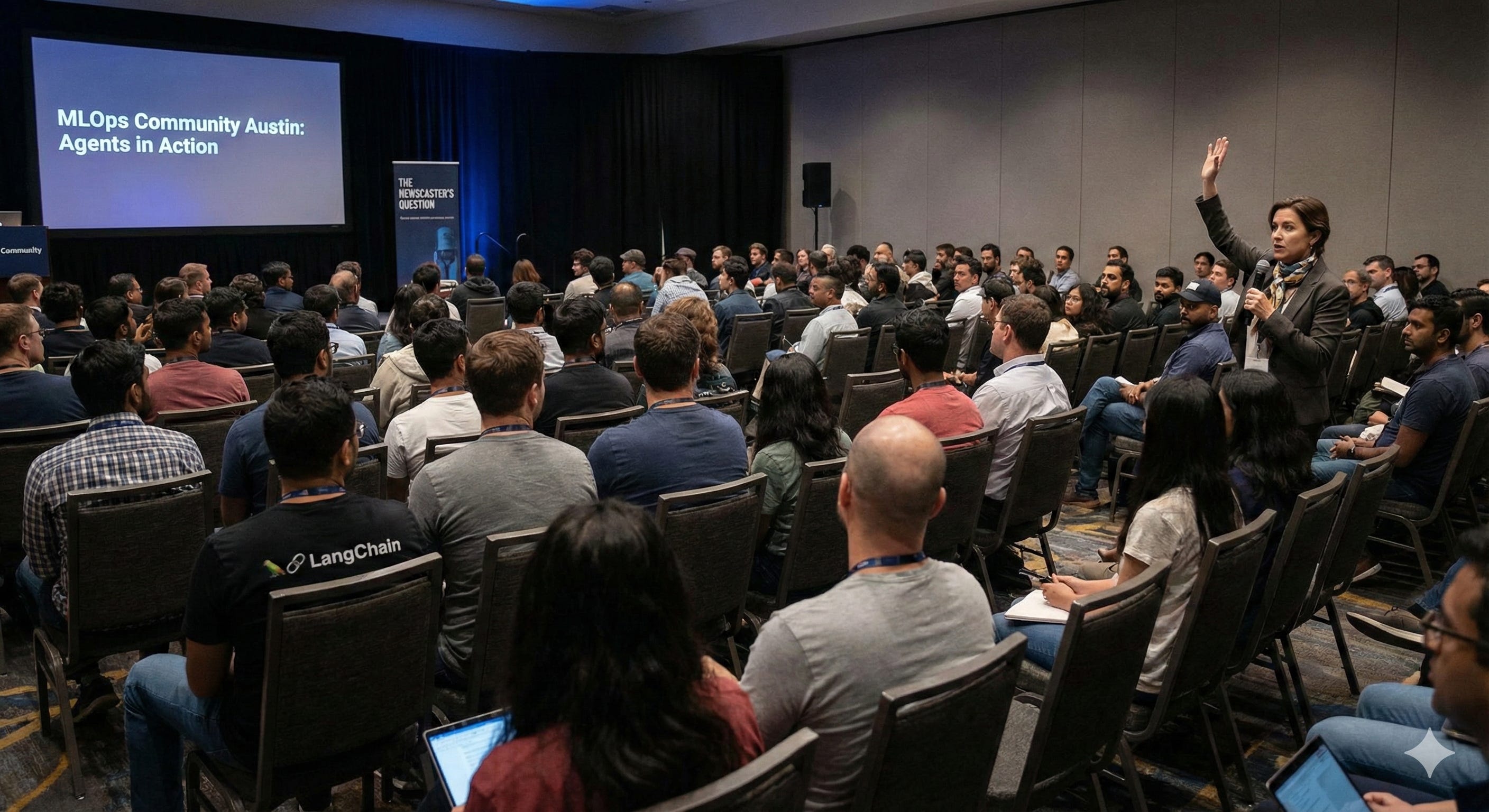
A few weeks earlier, I was at the MLOps Community meetup in Austin—”Agents in Action”. The room was packed with engineers, data scientists, and architects discussing LangChain orchestration, retrieval-augmented generation, and the finer points of agent evaluation frameworks.
During Q&A, a hand went up in the back.
“Hi, I’m a newscaster from a cable company in San Antonio. I drove an hour to be here because I need to understand something.”
The room quieted. This wasn’t our typical audience.
“I get that these AI models are brilliant. I understand they can write poetry, answer questions, generate images. But here’s what I don’t get: How do I actually get them to DO something in my organization? Not talk about doing something—actually do it.“
The silence was deafening.
Here was someone from outside our bubble—not a data scientist, not an ML engineer—asking the exact same question that CIO had asked. The same question I hear from every enterprise leader, just phrased more directly.
And honestly? Most of the room didn’t have a good answer.
The Students’ Fear
After speaking at the Toronto Machine Learning Summit, a group of computer science students cornered me.
“We’re graduating in May,” one said, anxiety evident. “We’ve been learning AI and machine learning for four years. But every week there’s another article saying AI is replacing programmers. LinkedIn is full of posts about agents automating away junior roles. Are we wasting our time? Will we even have jobs?“
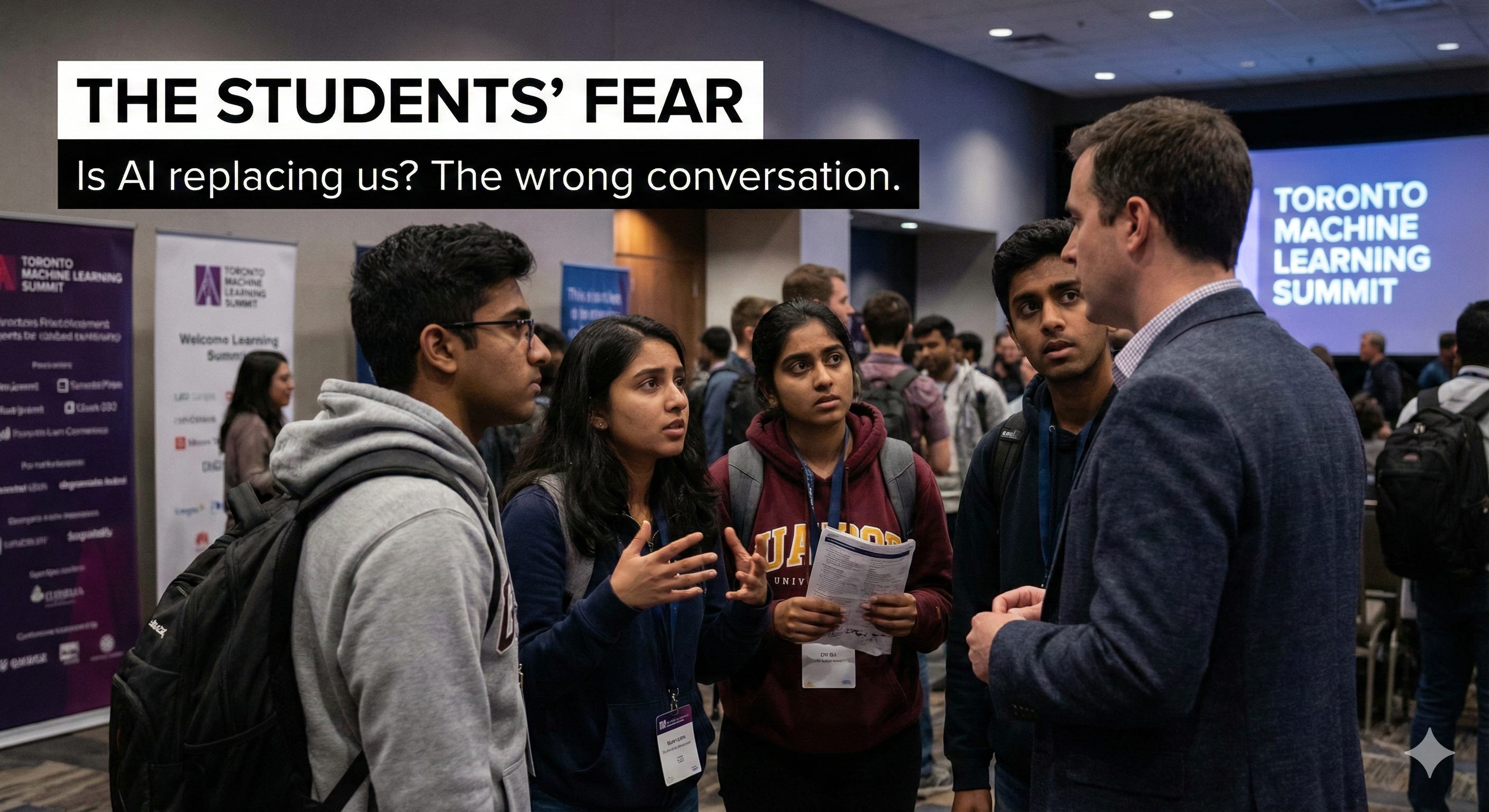
I looked at these bright, worried faces—the same anxiety I see in AI majors, boot camp graduates, and mid-career engineers concerned about displacement.
And I realized: We’re having the wrong conversation about AI. All of us.
The media narrative is “AI will replace workers.”
The vendor narrative is “Deploy chatbots, achieve transformation.”
The analyst narrative is “92% of executives plan to increase AI spending”.
But nobody’s talking about the gap between pilots and production. Nobody’s addressing how to build governance frameworks that enable rather than block. And nobody’s explaining to that CIO—or that newscaster, or those students—what the path forward actually looks like.
That’s what this series is about.
Who I Am (And Why I’m Writing This)
I’m Mario Lazo, Principal AI Solution Architect specializing in Data and AI. This year alone, I’ve:
Led steering committees and curated tracks for major AI conferences including MLOps World GenAI Summit and Toronto Machine Learning Summit
Hosted AI meetups bringing together practitioners, executives, and students to bridge the gap between theory and operational reality
Advised C-level leaders at organizations from Fortune 100 enterprises to high-growth companies of 10,000+ employees on their AI strategies
But more importantly, I’ve spent the past several years actually building Gen Ai and agentic systems that work in production:
2000 to 6,000 invoices per day processed for a major hospital network (Document Processor pattern)
$30 million in validated savings by training 412 citizen developers to build low to pro-code automation at a healthcare organization
$500,000 innovation award at a world-renowned medical center by reducing critical patient intake from 72+ hours to under 24 hours—literally saving lives (Service Orchestrator pattern)
Directly ran AI programs that implemented more than 35 agents and helped improve knowledge management for 55+ copilots and 20+ agents that ran end-to-end orchestration
I’ve worked across healthcare, telecommunications, manufacturing, government, financial services, and energy. I’ve been working to build the ideal “Agent Factory”—a governed, scalable ecosystem that treats AI agents like probabilistic workers, not magic. This is the engine that builds the AI engine.
And here’s what I’ve learned from those three conversations—with the CIO, the newscaster, and the students:
The gap between “brilliant AI” and “operational AI” is not a technology problem. It’s an architecture problem. And it’s solvable.
What This Series Will Cover
Over six articles, I’m going to show you how to bridge that gap. Not with theory. Not with vendor pitches. With battle-tested patterns, real war stories (including spectacular failures), and a pragmatic framework that works whether you’re a Fortune 100 CIO or a mid-market product leader.
My Promise (And the Provocation)
I’m going to be blunt in this series. If that bothers you, there are plenty of AI blogs that will reassure you that your chatbot strategy is fine and transformation is just around the corner.
But if you want the truth—the messy, hard-won, battle-tested truth about what actually works when building enterprise AI systems at scale—you’re in the right place.
Here’s my core thesis:
Building “smart” AI is a solved problem. Building “useful” AI is hard. And building “trustworthy” AI at scale is the defining challenge.
According to recent research, by 2030, 45% of organizations will orchestrate AI agents at scale. But right now, only 5% can get pilots into production.
The gap between 5% and 45%? That’s where your competitive advantage lives.
The organizations that figure this out will create “net-new business capabilities, fundamentally changing what’s possible at enterprise scale”. The others will drown in pilot projects and missed board commitments.
Which group do you want to be in?
Here is the Complete Agentic Blueprint
For easy access, feel free to select
Article 1: The 3-dimensional maturity model (Brain, Hands, Shield)
Article 2: The 5 levels of autonomy (Copilot → Autopilot)
Article 3: The team structure (Hub-and-Spoke, GPO-GSO pairs)
Article 4: The methodology (Streamline, Empower, Delight)
Article 5: The anti-patterns (avoid the Four Disasters)
Article 6: The destination (Human-Led, Agent-Operated)